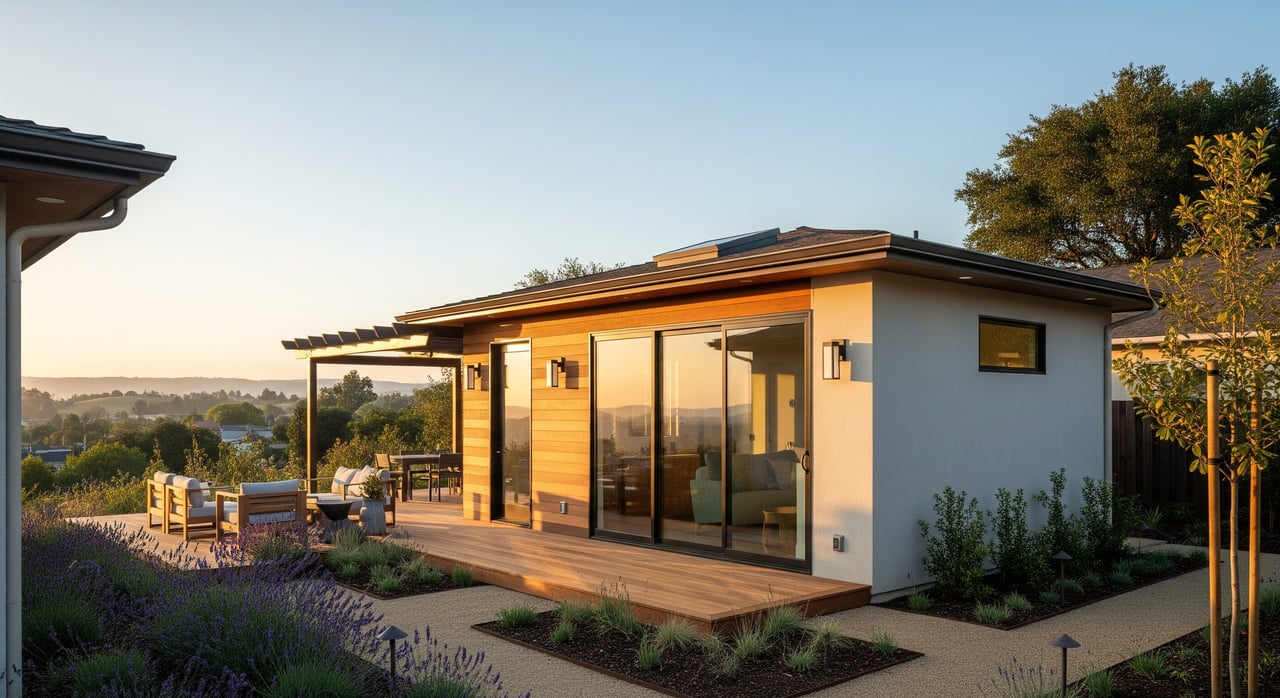
Thinking about adding a backyard cottage or converting your garage in Pleasanton? You are not alone. Many homeowners want an ADU for rental income, space for family, or long-term resale value. In this guide, you will learn how ADUs work in California, what to expect from Pleasanton’s process, where size and parking limits usually land, and how to budget realistic costs. Let’s dive in.
ADU basics in California
An accessory dwelling unit is a secondary home on the same lot as your primary residence. It can be a new detached structure, an attached addition, or a conversion of existing space. California also allows a junior ADU (JADU), which is typically created within the existing home and is 500 sq ft or less.
State law sets many of the core rules for ADUs across cities. Most compliant projects receive ministerial review, which means staff checks your plans against objective standards without subjective hearings. California also limits when cities can require parking and places guardrails on certain impact fees, especially for smaller units.
Pleasanton’s local context
Pleasanton follows state law and administers ADUs through its Community Development Department. Your first step is usually a quick conversation at the Planning counter or a pre-application check. Staff can confirm zoning, setbacks, height limits, and any neighborhood overlays that affect design.
Because local rules can change, ask the City for its current ADU checklist and fee schedule. These documents outline submittal requirements, plan review steps, and what fees may apply to your project.
ADU types you can consider
- Detached ADU: A separate backyard unit or a new build replacing a garage.
- Attached ADU: An addition connected to your main home.
- Conversion ADU: A garage, basement, or interior space turned into a dwelling that meets code.
- Junior ADU: Up to 500 sq ft, created within the main home. One of the units must be owner-occupied.
Size limits at a glance
California provides common benchmarks for ADU sizes, while cities may set local caps consistent with state law. JADUs are typically allowed up to 500 sq ft. Many jurisdictions allow detached or attached ADUs up to 1,200 sq ft, but Pleasanton may apply specific maximums by zoning district. Confirm your allowed floor area with Planning before you design.
Parking rules to verify
State law reduces or waives parking in many situations. For example, ADUs created within existing space are often exempt, and units near public transit may not require new parking. Pleasanton’s application of these rules can depend on your site. Ask staff early so your site plan addresses driveways, access, and any district-based restrictions.
The Pleasanton permit path
Most code-compliant ADUs are processed ministerially. That helps keep the focus on meeting objective standards like setbacks, height, and building code. You will submit plans for Planning and Building review, respond to any corrections, and then receive building permits. Inspections follow during construction, and you will receive a certificate of occupancy at the end.
Typical Bay Area costs
Construction costs vary with scope, site work, and finish level. Use these regional ranges to start your budget:
- Conversion or interior ADU: About $60 to $250 per sq ft depending on structural changes, utility upgrades, and finishes.
- New attached or detached ADU: Often $250 to $600+ per sq ft in Bay Area markets, with Pleasanton commonly toward the higher end. Complex sites and premium finishes push costs higher.
- Total project budgets: Roughly $100,000 for a basic conversion to $300,000–$500,000+ for many detached units. Luxury or complex projects can exceed these figures.
Add soft costs like architecture, engineering, surveys, and Title 24 energy documentation. City plan check and building permit fees, any impact fees, and utility connection fees should be confirmed on Pleasanton’s current fee schedule. Include a contingency of 10 to 20 percent to manage surprises.
Financing your ADU
Homeowners often use a mix of:
- Cash, cash-out refinance, or a home equity loan/HELOC.
- Construction or renovation loans, sometimes rolling to permanent financing.
- Agency products that can include ADUs under certain guidelines.
- Local or state programs that may offer incentives for income-restricted ADUs. Check for current Alameda County or regional options.
Talk with lenders early to match your scope and timeline with the right product.
Taxes, renting, and insurance
New construction usually increases assessed value. Contact the county assessor to learn how an ADU may affect your property taxes. If you plan to rent your ADU, review landlord-tenant rules and any local registration or short-term rental policies. Update your homeowner’s insurance to reflect the new unit. Landlord coverage may be appropriate if the ADU will be rented.
A step-by-step Pleasanton roadmap
Step 0: Early feasibility
- Verify your zoning and any neighborhood overlays or HOA rules.
- Sketch a concept: location, size, access, and parking.
- Check utility conditions, including sewer lateral, water, and electrical capacity.
Step 1: Meet with the City
- Visit the Planning counter for a pre-application discussion.
- Request the ADU checklist and current fee schedule.
- Confirm development standards such as setbacks, height, and lot coverage.
Step 2: Design and scope
- Choose your ADU type: conversion, attached, detached, or JADU.
- Engage a design professional if needed and plan for Title 24 energy compliance.
- Get preliminary contractor estimates and identify utility work or grading needs.
Step 3: Submit application
- Prepare complete submittals: site plan, floor plans, elevations, structural and energy documents.
- Ask for the current ministerial review timeline and respond quickly to corrections.
Step 4: Permits and construction
- Pay fees and pull building permits.
- Schedule inspections at required milestones.
- Obtain final sign-off and certificate of occupancy.
Step 5: After move-in
- Update insurance and tax records.
- If renting, set up compliant leases and maintenance plans.
- Keep your as-built plans and permits in a safe place.
Timeline expectations
Every site is different, but a typical flow includes design and bidding, plan check, and construction. Ministerial review helps, yet plan revisions, utility work, and inspections can extend schedules. Ask Pleasanton staff for current processing times and build in margin for materials and labor availability.
Common pitfalls to avoid
- Designing before confirming local standards. A quick planning check can save redesign costs.
- Underestimating utility needs. Sewer, electrical, and trenching often drive budgets.
- Forgetting soft costs and contingencies. Include design, permits, and 10 to 20 percent for surprises.
- Skipping parking analysis. Even with state waivers, access and layout matter.
- Overbuilding for the lot. Match size and finishes to neighborhood norms and your long-term goals.
How McDowell Homes Group can help
If you are weighing an ADU to boost flexibility, rental potential, or eventual resale, expert local guidance is invaluable. Our team understands which Pleasanton neighborhoods and lot types commonly support ADUs and how buyers value them. We help you evaluate likely return on investment, position your property for future sale, and, when you are ready to list, manage pre-sale improvements and premium marketing through our Concierge Real Estate approach.
Have questions about ADU resale value, buying a home with ADU potential, or timing a sale around your project? Connect with the local team that treats every client like a neighbor. Reach out to McDowell Homes Group to start the conversation.
FAQs
What is an ADU in Pleasanton?
- An ADU is a secondary home on your property, such as a detached backyard unit, an attached addition, a garage conversion, or a junior ADU created within the main house.
How big can my Pleasanton ADU be?
- State benchmarks allow JADUs up to 500 sq ft and many ADUs up to 1,200 sq ft, but Pleasanton may set specific caps by zone. Confirm your maximum with Planning before design.
Do I need parking for an ADU in Pleasanton?
- State law often waives parking for conversions or units near transit. Pleasanton applies these rules case by case, so verify requirements early in your site plan.
How much does an ADU cost in the Tri‑Valley?
- Conversions often range from about $60 to $250 per sq ft. New attached or detached units commonly run $250 to $600+ per sq ft, with total budgets from roughly $100,000 to $300,000–$500,000+.
What permits are required for a Pleasanton ADU?
- You will need ministerial Planning and Building approvals, building permits, and inspections. Many projects proceed without discretionary design hearings if they meet objective standards.
Will an ADU raise my property taxes?
- New construction typically increases assessed value. Contact the county assessor to understand how your ADU will be assessed and how that affects your tax bill.
Can my HOA stop me from building an ADU?
- HOAs can have rules that affect design or siting, though state law limits some restrictions. Review your CC&Rs and coordinate with both the HOA and the City early.